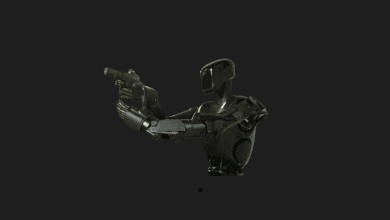
Airbus Welcomes a New Worker: Chinese Humanoid Robots Join the Assembly Line



I have always said that the moment we see humanoid robots stepping out of viral video demos and into actual, high-stakes factories, the game changes forever. Well, that moment is happening right now.
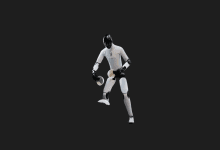
Airbus, the European aviation giant, has officially shaken hands with UBTech Robotics, a major player from China. They aren’t just talking about the future; they are bringing it into the hangar. Airbus has purchased UBTech’s Walker S2 industrial humanoid robot to test it directly on the aircraft production line.
As someone who obsesses over both aviation and automation, I find this fascinating. Building a commercial airliner isn’t like assembling a toaster or even a car. The margin for error is effectively zero. The fact that Airbus is willing to let a bipedal robot touch their planes is a massive vote of confidence in where this technology is heading.
Here is the deep dive into what this partnership means, the tech behind the robot, and why this specific machine might be the future of manufacturing.
The Partnership: East Meets West in the Hangar

This deal is significant for a few reasons. First, it’s a high-profile collaboration between a European industrial titan and a Chinese tech firm. In a world where tech borders are tightening, innovation like this finds a way through.
Airbus isn’t just buying a robot for a PR stunt. They are integrating the Walker S2 into one of the most difficult manufacturing environments on Earth.
- The Goal: To figure out exactly which tasks a humanoid can handle in aircraft assembly.
- The Scope: They are testing it for high-precision tasks, safety compliance, and reliability.
UBTech sees this as a major milestone for their global expansion. Getting their hardware into an Airbus facility is essentially the “Gold Standard” seal of approval. If it works there, it can work anywhere.
Meet the Walker S2: Not Your Average Droid

So, what is this robot actually capable of? I looked into the specs, and it’s clear this machine was built for work, not for dancing on TikTok.
The Walker S2 was launched specifically for industrial use. Standing at about 175 cm (5 feet 9 inches), it is perfectly sized to work in environments designed for humans. It doesn’t need special ramps or modified workstations; it just walks in and gets to work.
Key Specs at a Glance:
- Height: ~175 cm.
- Payload: It can lift and carry about 15 kg (33 lbs). That’s enough for heavy power tools, rivet guns, or component boxes.
- The Brain: It runs on UBTech’s proprietary “Co Agent” AI platform. This allows it to coordinate complex movements, recognize objects visually, and adapt to the chaotic nature of a factory floor.
- Dexterity: The hands are designed with advanced joint capabilities to mimic human fine motor skills.
I think the visual perception system is the real winner here. In an aircraft hangar, things move. Tools get displaced. The Walker S2 scans its environment and adjusts, rather than just blindly following a pre-programmed path like those old orange robotic arms.
The Game Changer: It Never Sleeps
If you asked me what the single most impressive feature of the Walker S2 is, I wouldn’t say its hands or its AI. I would say its endurance.
Human workers need sleep. They need lunch breaks. They have shifts. The Walker S2 features an autonomous battery replacement system.
Think about that: When the robot runs low on power, it doesn’t go plug itself into a wall and sit there for two hours. It swaps its battery and keeps going.
This allows for 24/7 continuous operation. In a smart factory where every second of downtime costs money, having a worker that never stops is a massive efficiency boost. This is what truly separates the “cool tech” from the “economically viable tech.”
Why Aviation is the Ultimate Test

I want to emphasize how bold this move is by Airbus. Automotive assembly (where we usually see robots) is repetitive and high-volume. Aviation is different.
- Complexity: An aircraft has millions of parts.
- Precision: Tolerances are measured in microns.
- Safety: If a robot over-torques a bolt or scratches a fuselage, it’s a massive safety issue.
Airbus is essentially using the Walker S2 to stress-test the concept of humanoid robotics. They want to see if a robot can maintain the “safety-critical” standards required to put humans in the sky. If the Walker S2 succeeds here, I believe we will see a rapid rollout across other high-precision industries.
UBTech’s Global Ambition
This isn’t UBTech’s first rodeo. While the Airbus deal is flashy, the Walker S2 is already clocking in shifts elsewhere.
- BYD: The Chinese EV giant is using them in car manufacturing.
- Foxconn: The people who make iPhones are testing them on electronics lines.
- Texas Instruments: Just last month, the US chipmaker started testing the Walker S2 in its facilities.
The numbers back up the hype. As of late December, UBTech had produced 1,000 units at their factory in Liuzhou. They reported orders exceeding $201 million (1.4 billion Yuan) by 2025 and are aiming for an annual production capacity of 10,000 units by 2026.
This tells me that we are moving past the “prototype” phase. We are entering the era of mass production for humanoid workers.
Final Thoughts
I remember watching sci-fi movies where robots walked alongside humans in hangars, repairing spaceships. Seeing Airbus take this step makes me realize that future is arriving faster than we expected.
It’s not just about replacing human labor; it’s about augmenting it. If a robot can handle the dangerous, repetitive, or physically draining tasks for 24 hours a day, it frees up human engineers to focus on the complex problem-solving that machines still can’t touch.
The Walker S2 has a big job ahead of it. I’ll be watching closely to see if it passes the Airbus test.
I’d love to hear your perspective: Would you feel comfortable flying in a plane knowing a humanoid robot assembled the critical components?
You Might Also Like;